Q&A
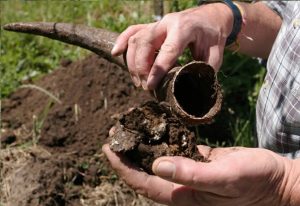

Permaculture is an approach to land management and settlement design that adopts arrangements observed in flourishing natural ecosystems. It includes a set of design principles derived using whole-systems thinking. It applies these principles…
When European settlers arrived in America in the early 1600s, the Iroquois had been growing the “three sisters” for over three centuries. The Pueblo and other tribes of the mid…
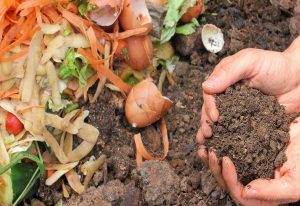
For the everyday person and backyard gardener, composting is important because it reduces the amount of organic waste sent to landfills, but more importantly when it is used in the…
Over the last 100 years we have lost over 75% of our agricultural diversity. In past generations, farmers would save and share their seed with one another, thus ensuring biodiversity…
The definition put forth by the Global agricultural authorities is: “Food sovereignty is a food system in which the people who produce, distribute, and consume food also control the mechanisms…
Hügelkultur (usually transliterated into English as “hugelkultur”) is a method of gardening that has been used for centuries in Eastern Europe and Germany, often as part of a broader permaculture…
Stinging nettle, scientifically known as “urtica dioica,” from the Latin word “uro,” which means “to burn,” is a perennial plant recognized for its painful sting caused by tiny hairs on…
Viewed as a prime nutritious vegetable in many places around the world. In North America, however, it’s commonly mistaken for a weed. It is time for purslane to get a…
Bone broth is a nutritious liquid made by simmering animal bones and connective tissues in water for an extended period, often with added vegetables and seasonings. It is commonly used…
Kale is definitely one of the healthiest and most nutritious plant foods in existence. Kale is a cruciferous vegetable like cabbage, broccoli, cauliflower, collard greens and Brussels sprouts. It has…
Garlic Mustard (Alliaria petiolata) is a member of the mustard family and has a noticeable garlic aroma — hence its name. Also known as Hedge Garlic, Jack-by-the-Hedge, Garlic root, Sauce-Alone,…
We get lots of people who show interest in garlic scapes but have no idea what to do with them. I am overwhelmed by the number of recipes that are…
Have you ever compared a home-grown, farm fresh egg with an egg from the supermarket? Naturally raised chickens produce yolks that are a deep orange-yellow and taste like the old…
Known as wild leeks or ramps, allium tricoccum, is a North American species of wild onion widespread across eastern Canada and the eastern United States, appearing in mid-April and lasting…
Moon Wisdom from the Elders: Connecting Life with the Cosmos Calling upon the wisdom of our elders, our ancestors and ancient cultures, even things we heard our grandparents say,…
Maple water or maple sap is the clear sap collected from maple trees, primarily during the spring when the trees are active. It is rich in electrolytes and nutrients, making…
by John Staughton (BASc, BFA) last updated – July 10, 2024 ✓ Evidence Based If you haven’t cooked with garlic scapes, you are missing out on a simple and mildly flavorful part of the garlic plant…
Long story short: Biodynamic is the new organic, and you need to get behind it, like, yesterday. By Lauren Mazzo, Reposted from Article Dated October 28, 2016 Picture a family farm.…
By Karen Davis-Brown Originally published in the Winter 2011 issue of Biodynamics. This spring marks the tenth anniversary of the first gathering of North American biodynamic prepmakers. These gatherings were born…
Lecture Four by Rudolf Steiner Koberwitz, June 12, 1924 You have now seen what is essential in the discovery of spiritual-scientific methods for Agriculture, as it is for other spheres…